
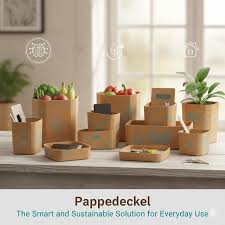
Pappedeckel, a term originating from the German language meaning “cardboard lid,” represents a simple yet surprisingly versatile invention with applications spanning packaging, sustainability, food services, and creative industries. Despite its seemingly modest appearance, the Pappedeckel serves as a vital component in modern packaging systems, particularly in the context of environmentally friendly alternatives to plastic and metal lids. Its design, functionality, and adaptability have enabled it to remain relevant across decades, bridging traditional practices with modern demands for efficiency, hygiene, and sustainability. This article explores the origins, practical uses, material innovations, environmental impact, industry applications, challenges, and future prospects of Pappedeckel, providing a comprehensive understanding of its significance.
1. Historical Origins of Pappedeckel
The Pappedeckel has roots in early European packaging innovations, where cardboard and paper-based solutions were widely utilized for protecting, storing, and transporting goods. As industrial production expanded in the 19th and 20th centuries, manufacturers sought affordable, lightweight, and hygienic alternatives to metal or wooden lids. The invention of Pappedeckel offered a solution that was cost-effective, easy to produce, and adaptable to various container sizes. Over time, it evolved from a basic protective cover to a standardized component in food and beverage packaging, reflecting both technological advancements in cardboard processing and the growing demand for practical, disposable packaging.
2. Material Composition and Design
Pappedeckel is typically made from layered cardboard or thick paperboard, often reinforced with coatings or laminates to provide water resistance, durability, and heat tolerance. The design of these lids is optimized for snug fitting, ensuring that they remain securely in place while protecting contents from contamination or spillage. Some variants include additional features such as insulating layers, perforations, or printed branding, highlighting their versatility in both functional and marketing roles. Modern Pappedeckel often balances ecological considerations with functional requirements, utilizing recyclable or biodegradable materials without compromising structural integrity or usability. The thoughtful engineering behind Pappedeckel demonstrates how even simple products can achieve high levels of efficiency and adaptability.
3. Applications in Food and Beverage Industry
One of the most common uses of Pappedeckel is in the food and beverage sector, particularly for takeaway services, coffee cups, and disposable containers. Restaurants, cafés, and catering services rely on Pappedeckel for its convenience, hygiene, and portability. Unlike plastic lids, cardboard lids offer better environmental performance, aligning with global trends toward sustainable packaging. Additionally, Pappedeckel can be customized with branding, logos, or informational prints, making them not only functional but also a medium for marketing and customer engagement. Their ability to insulate beverages while preventing spillage underscores the importance of design in everyday utility and customer satisfaction.
4. Environmental Impact and Sustainability
Sustainability has become a central consideration in modern packaging, and Pappedeckel represents a viable alternative to environmentally harmful plastics. Made from renewable resources and often fully recyclable or compostable, cardboard lids contribute to reducing landfill waste and minimizing carbon footprints associated with packaging. Some manufacturers incorporate recycled content into production, further enhancing environmental benefits. Additionally, by replacing single-use plastic lids, Pappedeckel supports global efforts to mitigate plastic pollution, conserve resources, and promote circular economies. Its eco-friendly properties have led to widespread adoption across environmentally conscious industries, proving that sustainability and practicality can coexist in packaging solutions.
5. Innovations and Technological Advancements
The Pappedeckel has not remained static over time; innovation has improved its functionality, usability, and aesthetic appeal. Technological advancements include moisture-resistant coatings, enhanced heat insulation, and ergonomic designs that facilitate easier handling. Digital printing allows for high-resolution graphics, enabling branding opportunities and communication of product information. Some manufacturers have developed foldable or collapsible Pappedeckel variants, catering to logistics efficiency and space optimization. These innovations demonstrate how a simple product can evolve through technological improvements while maintaining its core function as a protective and convenient lid.
6. Industry Applications Beyond Food
While most commonly associated with beverages and food containers, Pappedeckel has applications across multiple industries. It is utilized in arts and crafts, where cardboard lids serve as stencils, bases, or creative surfaces. In industrial packaging, they can act as protective covers for fragile items during shipping. Educational projects often incorporate Pappedeckel for hands-on activities, model building, and design experimentation. Its lightweight nature, ease of manipulation, and availability in different sizes make it versatile for applications beyond its original food-related purpose. The adaptability of Pappedeckel highlights the ingenuity of repurposing simple materials for diverse functional and creative uses
7. Challenges and Limitations
Despite its many advantages, Pappedeckel is not without limitations. Cardboard lids may be less durable than plastic counterparts in certain situations, particularly when exposed to high moisture or heavy weight. Heat retention can be less effective compared to specialized insulating materials, limiting their utility for very hot beverages over extended periods. Additionally, achieving perfect uniformity and fit for different container types can be a manufacturing challenge, requiring precision in production and quality control. Addressing these limitations often involves material innovations, careful design adjustments, and integration of supplementary protective layers, ensuring that Pappedeckel remains a reliable and practical solution.
8. Market Trends and Future Outlook
The demand for sustainable and convenient packaging continues to rise, positioning Pappedeckel as a key component of future packaging solutions. Market trends indicate increased investment in eco-friendly materials, custom designs, and integration with smart packaging technologies such as QR codes or interactive surfaces. Growth in the takeaway and delivery sector, coupled with global sustainability initiatives, ensures that Pappedeckel will remain relevant and increasingly valuable. Future developments may include hybrid materials, enhanced durability, and multifunctional designs that expand its applications while continuing to meet environmental goals. The trajectory of Pappedeckel demonstrates the potential for even simple products to innovate and adapt to evolving market demands.
Conclusion
Pappedeckel exemplifies how a modest, everyday object can carry significant functional, economic, and environmental value. From its historical origins to modern applications in food services, creative industries, and sustainable packaging, it represents a balance of practicality, adaptability, and eco-conscious design. The continued innovations and adoption of Pappedeckel highlight its relevance in a world increasingly focused on environmental responsibility and efficient solutions. By understanding its applications, benefits, challenges, and potential, industries and consumers alike can appreciate the vital role that simple yet thoughtfully designed products play in daily life and sustainability efforts
Frequently Asked Questions (FAQ)
What is a Pappedeckel?
A Pappedeckel is a cardboard lid used primarily for food containers, beverages, and packaging, known for its lightweight, eco-friendly, and practical design.
Why are Pappedeckel popular in food services?
They are cost-effective, hygienic, environmentally friendly, customizable with branding, and provide convenience for takeaway and delivery services.
Are Pappedeckel environmentally friendly?
Yes, they are typically recyclable, compostable, and often made from renewable or recycled materials, reducing environmental impact compared to plastic lids.
What industries use Pappedeckel besides food?
Arts and crafts, industrial packaging, educational projects, and creative applications utilize Pappedeckel due to its versatility and ease of use.
What are the challenges of using Pappedeckel?
Limitations include reduced durability in high moisture, lower heat retention compared to specialized lids, and manufacturing precision requirements for different container types.
