
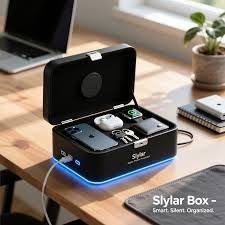
Slylar Box is an emerging technological solution that combines innovation, utility, and adaptability in a compact platform. While the specifics of its functionalities can vary across applications, Slylar Box represents a convergence of smart technology, automation, and user-focused design, making it relevant across multiple sectors, including consumer electronics, industrial automation, data management, and creative industries. Its design and implementation reflect the growing demand for versatile, efficient, and integrated systems capable of addressing contemporary technological challenges.
This article delves into Slylar Box comprehensively, exploring its technological foundation, practical applications, benefits, industry impact, challenges, and future potential. By examining these aspects, readers can gain a detailed understanding of how Slylar Box contributes to innovation, streamlines operations, and serves as a critical component in modern technological ecosystems.
Technological Foundation of Slylar Box
The Slylar Box is built on a foundation that prioritizes modularity, connectivity, and scalability. At its core, it integrates hardware and software components that work in synergy to provide seamless functionality. The platform is designed for adaptability, allowing users to configure settings, integrate additional modules, and connect to external systems or networks with ease.
Key technological features may include embedded processors, IoT integration, cloud compatibility, automated control mechanisms, and real-time data processing capabilities. These elements enable Slylar Box to perform complex tasks efficiently, offering precision, reliability, and ease of use across diverse applications.
Applications Across Industries
Slylar Box has a wide range of applications spanning multiple industries. In industrial settings, it can serve as a control unit for automation systems, monitoring machinery performance, optimizing workflows, and facilitating predictive maintenance. Its compact design allows it to be implemented in constrained spaces while delivering robust performance.
In consumer technology, Slylar Box may function as a smart home hub, connecting devices, managing security systems, and enabling automation of daily routines. In creative industries, it can assist with digital content management, media processing, and collaborative workflows, offering flexibility and efficiency for professionals working on complex projects.
The adaptability of Slylar Box extends to research, data analysis, and educational applications, where it supports experimentation, simulation, and learning initiatives by providing an accessible and configurable platform for various tasks.
Benefits and Advantages
Implementing Slylar Box provides numerous benefits for users and organizations. Its modular and scalable design allows for easy customization, accommodating the specific needs of different applications and industries. The integration of real-time processing, automated control, and connectivity enhances operational efficiency, reduces human error, and optimizes resource utilization.
Additional advantages include cost-effectiveness, portability, and ease of deployment. Slylar Box minimizes infrastructure requirements while offering high functionality, making it accessible to a broad range of users. Its adaptability ensures that it can evolve alongside technological advancements, remaining relevant and effective over time.
Industry Impact and Influence
The adoption of Slylar Box has a notable impact on industries by promoting efficiency, innovation, and productivity. In manufacturing and industrial automation, it enhances process monitoring, predictive maintenance, and workflow optimization, contributing to reduced downtime and increased output quality. In creative and digital sectors, it enables smoother project management, enhanced collaboration, and efficient handling of digital assets.
Moreover, Slylar Box supports the digital transformation of organizations, encouraging the integration of smart technologies and data-driven decision-making. Its influence extends to operational strategy, workforce training, and technological adoption, underscoring its role as a catalyst for innovation and industrial advancement.
Challenges and Considerations
Despite its advantages, implementing Slylar Box presents challenges. These may include initial investment costs, integration with existing systems, and ensuring compatibility with a variety of devices and software. Users may require technical expertise to configure the platform effectively and maximize its capabilities.
Other considerations involve cybersecurity, data privacy, and system maintenance. Ensuring secure and reliable operation is essential, particularly when Slylar Box is used in sensitive environments or critical industrial applications. Organizations must adopt best practices in deployment, monitoring, and support to mitigate potential risks.
Future Trends and Prospects
The future of Slylar Box is closely tied to advancements in IoT, AI, machine learning, and cloud computing. Integration with AI-driven analytics, predictive maintenance tools, and smart automation systems will enhance its capabilities, allowing for more sophisticated applications and decision-making support.
As industries continue to embrace digital transformation, Slylar Box is expected to evolve in portability, energy efficiency, and multi-platform integration. Its role in supporting sustainable practices, real-time analytics, and connected ecosystems positions it as a key component in the technological strategies of tomorrow.
Conclusion
Slylar Box represents a versatile and innovative solution for modern technological applications. Its modular design, connectivity, and adaptability enable it to serve diverse industries, from industrial automation to creative workflows. By enhancing efficiency, streamlining operations, and supporting data-driven decision-making, Slylar Box contributes significantly to innovation and productivity.
Although challenges related to integration, technical expertise, and security exist, the long-term benefits of Slylar Box make it an invaluable tool for organizations and individuals seeking reliable, adaptable, and advanced technological solutions. Its continued evolution will further solidify its position as a pivotal technology in the ongoing digital transformation of various sectors.
Frequently Asked Questions (FAQ)
What is Slylar Box?
Slylar Box is a versatile technological platform designed to integrate smart hardware, software, and connectivity to support diverse applications across multiple industries.
Where is Slylar Box used?
It is used in industrial automation, smart home systems, creative industries, research, data management, and educational projects requiring modular and adaptable technological solutions.
What are the key benefits of Slylar Box?
Benefits include enhanced operational efficiency, modularity, scalability, ease of deployment, reduced human error, cost-effectiveness, and adaptability to evolving technological needs.
What challenges are associated with Slylar Box?
Challenges include integration with existing systems, technical configuration, cybersecurity, data privacy, maintenance requirements, and the need for user expertise.
What is the future potential of Slylar Box?
Future potential involves AI and machine learning integration, IoT connectivity, real-time analytics, sustainable design improvements, multi-platform compatibility, and expanded industry applications.
