
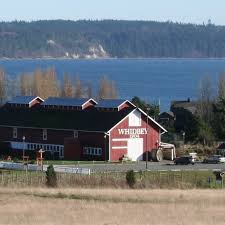
Whidbey Island, a place of evergreen forests, rugged coastline, and tight-knit communities, is also a land of real geological risk. As the island sits near seismic fault lines and faces potential tsunami threats, the importance of robust local alert systems and community readiness cannot be overstated. “Alert Whidbey 2.0” symbolizes a next-generation approach to emergency management—one that leverages modern technology, community engagement, and deep preparedness to protect lives and livelihoods on Whidbey. This concept envisions an alert infrastructure not just limited to periodic siren tests or passive warnings, but a fully integrated system combining early-warning technologies, public education, real-time data, and community-based response strategies.
In this article, we explore what “Alert Whidbey 2.0” might look like in practice: its risks, its current systems, the gaps that need to be filled, and how residents can contribute to a safer future. By weaving together science, policy, and local culture, we aim to show how Whidbey Island can evolve from simply reacting to threats, to proactively preparing for them—and in doing so, become a model for other coastal and seismic-risk communities.
1. The Hazard Landscape on Whidbey Island
Whidbey Island is geographically situated in a region of significant seismic risk. The island faces potential earthquakes from both the Cascadia Subduction Zone and local faults such as the Southern Whidbey Island Fault. North Whidbey Fire and Rescue+2Whidbey News-Times+2 These seismic threats are more than theoretical: a major earthquake could generate a tsunami that affects the shoreline, and possibly parts of the island, within a short time frame.
In fact, studies conducted by emergency management authorities suggest that a magnitude-9.0 earthquake along the Cascadia Subduction Zone could produce tsunami waves reaching Whidbey’s western shores in approximately 90 minutes. Whidbey News-Times+2Whidbey News-Times+2 The risk is compounded by the possibility of underwater landslides, which could provoke localized tsunami waves even without a massive quake. islandcountywa.gov Thus, the hazard landscape is not static — it is alive with uncertainty, demanding vigilance, planning, and constant readiness.
2. Current Alert Infrastructure: Strengths and Limitations
To its credit, Island County has already implemented a number of alert mechanisms aimed at protecting residents of Whidbey Island. The county’s myAlerts system, powered by AlertSense, allows residents to receive emergency notifications by text message, email, voicemail, or other channels. islandcountywa.gov This system covers a range of alerts—not just tsunamis, but severe weather, public safety incidents, and community notifications.
In addition, All-Hazard Alert Broadcast (AHAB) sirens have been strategically installed at critical coastal points across Whidbey. Whidbey News-Times+1 These sirens are designed specifically to reach people who may not have immediate access to televisions, radios, or smartphones—especially outdoors or near the shoreline. Notably, when a real tsunami warning is issued, these sirens emit a prolonged wail followed by a voice message instructing affected residents (in both English and Spanish) to evacuate to higher ground. Whidbey News-Times
Yet despite these efforts, there remain challenges: the sirens are less audible indoors, making additional alert channels critical; not all residents are enrolled in myAlerts; and the rapid onset of tsunami waves from a local seismic event could outpace some of the alert processes. These gaps underscore the need for a more comprehensive “2.0” version of the alert system.
3. The Case for “Alert Whidbey 2.0”
Alert Whidbey 2.0 is more than modernizing warning systems—it’s about creating a holistic resilience framework. It imagines an evolved system in which:
-
Early-warning technologies are enhanced. This could include more sophisticated sensors, local seismic stations, and real-time data integration that detect earthquakes and generate automated alerts faster.
-
Multi-channel alerting is expanded. Sirens remain a backbone, but alerts could also send push notifications, voice calls, smart-home integrations, and AM/FM radio in real time.
-
Evacuation routes and mapping are refined, with updated tsunami inundation maps and signage. Island County has identified high-risk zones and evacuation paths. islandcountywa.gov+1 Ensuring that every resident knows where to go, and how quickly, is essential.
-
Community education and drill programs are regularly run. By combining the Great Washington ShakeOut drills with local tsunami drills, residents develop muscle memory for both earthquake response and rapid evacuation. This helps ensure that when a warning comes, people move decisively.
-
Public engagement platforms promote awareness. Through local town halls, social media, and school programs, the philosophy of readiness becomes part of everyday island life.
By designing Alert Whidbey 2.0 in this integrated way, the community can move beyond passive alerting into a more active, empowered state of preparedness.
4. Evacuation Planning and Community Readiness
Preparation for a tsunami or major earthquake on Whidbey Island is not optional—it is a necessity, given the geological risks. For many residents, that means familiarizing themselves with evacuation zones, which have been mapped by local emergency management agencies. islandcountywa.gov+1 These maps show which parts of the island are more likely to be inundated and where safe high ground or inland shelters are located.
Residents are encouraged to develop a family emergency plan. The plan should include: knowing multiple evacuation routes (in case some roads are impassable), establishing meeting points inland, and having a communication strategy (both for during and after a disaster). Tools like NOAA weather radios, NOAA-compatible smartphones, and even the use of the myAlerts system can make a substantial difference. dnr.wa.gov
Furthermore, residents should build and maintain emergency kits that include food, water, first-aid supplies, and other necessities, ideally portable enough to carry during an evacuation. Knowing where to go is one thing; being able to survive until help arrives is equally critical in remote or exposed areas of the island.
5. Integrating Technology: Seismic Sensors and Warning Algorithms
A core pillar of Alert Whidbey 2.0 is leveraging technological advances to catch early signals of danger and trigger automated alerts based on data. Seismic sensors distributed around Whidbey Island, combined with real-time data processing, can provide earlier detection of earthquakes. These systems could feed into alert platforms that quickly evaluate the magnitude and location of tremors and issue alerts tailored to the risk level.
In addition, machine learning and predictive algorithms could assess not only earthquake data but also sea-level and oceanographic models, providing faster tsunami risk assessments. By integrating these models with the myAlerts system and siren networks, authorities could issue alerts that are both timely and location-specific, minimizing false alarms while maximizing response time.
Such a system requires collaboration between emergency management agencies, geographical scientists, and technology providers—but the payoff is enormous: the ability to warn residents not just generically, but with precision and speed.
6. The Role of Regular Testing and Community Drills
An alert system is only as effective as its reliability and the community’s familiarity with its signals. Regular testing of the sirens, known as AHAB (All-Hazard Alert Broadcast) sirens, is already underway on Whidbey Island—sirens are tested monthly, and a special annual test occurs on the third Thursday of October during the Great Washington ShakeOut. South Whidbey Record These tests should be repeatedly integrated with community drill exercises so that residents do not dismiss future wails as mere tests.
Community evacuation drills are vital. During a real tsunami or earthquake event, hesitation can cost lives. By practicing evacuation routes, familiarizing with high-ground zones, and running communication drills, residents build the reflexes they will need when every second counts. Schools, community groups, and local governments should all collaborate to make these drills as realistic as possible, including silent walk-throughs, timed evacuations, and role play.
7. Risk Communication and Public Engagement
One of the biggest challenges in emergency management is effective risk communication. For an Alert Whidbey 2.0 initiative to succeed, authorities must consistently engage with the public—not just during emergencies, but in everyday life. Informational campaigns, town hall meetings, and school programs can help demystify geological risk and encourage proactive behavior.
Moreover, communication platforms like social media, community newsletters, and local radio should be employed to disseminate education around tsunami signs (such as a sudden drop in water level or strong earthquake), evacuation plans, and how to stay informed. Island County’s myAlerts system is a good start, but public awareness of its existence and utility must grow. islandcountywa.gov
Through repeated messaging, people internalize the concept that earthquakes and tsunamis are not distant possibilities—they are real threats, and their preparedness matters.
8. Equity and Vulnerable Populations
Any alert system must consider vulnerable populations: elderly residents, people with disabilities, non-English speakers, and those without reliable access to technology. For Alert Whidbey 2.0 to be truly effective, special plans are needed to ensure these groups receive warnings in ways they can understand and act upon.
Sirens alone may not be heard by everyone, particularly those indoors or with hearing impairments. Therefore, layered alerts—including text messages, voice calls, and door-to-door checks—should be integrated into the plan. Emergency managers should partner with social service agencies, disability advocacy groups, and community leaders to design inclusive evacuation strategies that address mobility challenges, language barriers, and access to transportation.
By adopting an equitable approach to warning and evacuation, Alert Whidbey 2.0 becomes not just a system for some, but a system for all.
9. Governance, Funding, and Collaboration
A vision like Alert Whidbey 2.0 requires not just technical solutions, but political will, funding, and cross-agency collaboration. Local government agencies—including Island County Emergency Management, the Washington State Department of Natural Resources, and public safety departments—must align to prioritize resilience.
Funding mechanisms could include state and federal grants, public-private partnerships, and community fundraising. The installation and maintenance of sirens, sensors, and alert platforms are expensive, but the cost of inaction in the face of a major earthquake or tsunami would be far greater in terms of lives and property.
Collaboration should also extend to tribal nations, non-profits, and academic institutions. For instance, universities can support modeling and prediction; nonprofits can lead community education; and tribal leaders can help design culturally sensitive communication strategies. Only a unified, cooperative effort can bring the concept of Alert Whidbey 2.0 to life.
10. The Future Vision: Resilient Whidbey
Taken together, the pieces of Alert Whidbey 2.0 form a vision of a resilient, informed, and united community—one that does not simply respond to disaster, but prepares for it, learns from it, and grows stronger because of it. In this future, Whidbey Island’s residents know their evacuation paths, check their alert subscriptions, and participate actively in drills.
Technology plays a supportive role—not as a magic bullet, but as a tool. The combined system of sensors, sirens, and smart alerts gives everyone from schoolchildren to seniors a chance to survive and thrive. And the community, with a shared sense of agency and knowledge, becomes a living force of preparedness.
Alert Whidbey 2.0 is not just about warning—it’s about empowerment.
Frequently Asked Questions (FAQ)
Q1: What prompted the concept of “Alert Whidbey 2.0”?
The idea stems from growing awareness of seismic and tsunami risk on Whidbey Island, combined with existing alert infrastructure (sirens, myAlerts) that could be optimized and expanded for faster, more inclusive response.
Q2: How fast could a tsunami reach Whidbey Island after a big earthquake?
According to recent studies, a large earthquake in the Cascadia Subduction Zone could generate tsunami waves that reach Whidbey’s western shore in about 90 minutes. Whidbey News-Times+2Whidbey News-Times+2
Q3: What is the role of the AHAB sirens on Whidbey Island?
The All-Hazard Alert Broadcast sirens are placed at strategic coastal points (such as West Beach Road, Oak Harbor Marina, Lagoon Point) to warn residents of imminent danger, especially in situations where other alert channels might not reach them. Whidbey News-Times
Q4: How is Island County facilitating alert subscriptions?
Island County offers the “myAlerts” system (powered by AlertSense), which allows users to receive emergency alerts via text, email, voice call, or voicemail, based on their preferences. islandcountywa.gov
Q5: What should a Whidbey Island resident do to prepare?
Residents should create a family emergency plan (with evacuation routes and meeting points), maintain a “go-bag” with essential supplies, sign up for emergency alerts, and participate in community drills. Knowing local tsunami zones and high-ground areas is also critical.
Conclusion
Alert Whidbey 2.0 represents not just a technological upgrade, but a profound shift in how Whidbey Island understands and responds to risk. Rather than assuming “it won’t happen here,” the concept calls on residents, officials, and emergency planners to work together toward a future where every person is informed, prepared, and ready to act.
By combining early-warning sensors, multi-channel alerts, community drills, and inclusive planning, Whidbey can evolve into a place of both beauty and safety—where the power of nature is respected, the strength of community is harnessed, and the spirit of vigilance becomes part of daily life.
In a time when resilience matters more than ever, Alert Whidbey 2.0 is not just a plan—it’s a commitment. A commitment to life, to learning, and to loving the island we call home.
