
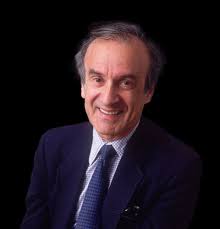
Elie Wiesel, the Nobel Peace Prize-winning author, Holocaust survivor, and human rights advocate, was born in Sighet, Romania, on September 30, 1928. His early life in Romania profoundly shaped his worldview, his understanding of suffering, and his lifelong commitment to remembering the atrocities of the Holocaust. Wiesel’s experiences in his native country, particularly the horrors of the Nazi occupation and the deportation of Jews from Sighet, became central to his work as a writer and activist. His memoir Night chronicles the unimaginable suffering he endured as a teenager, offering the world a firsthand account of life in concentration camps. This article explores Elie Wiesel’s life in Romania, the historical context of Romanian Jewry, the Holocaust’s impact on his family and community, his emigration, and his enduring legacy as a witness to history and a voice for human rights.
1. Early Life in Sighet, Romania
Elie Wiesel was born into a devout Jewish family in the town of Sighet, located in the Maramureș region of northern Romania. Sighet was a vibrant Jewish community where religion, tradition, and education played central roles. Wiesel grew up learning Hebrew, studying the Torah, and engaging with Jewish scholarship. His father, Shlomo Wiesel, and his mother, Sarah, instilled in him the values of morality, education, and cultural identity. Life in Sighet was marked by close-knit family ties, religious observance, and a sense of communal responsibility. Wiesel’s formative years in Romania cultivated his intellectual curiosity and spiritual foundation, which later became critical in his understanding of faith, suffering, and the human condition.
2. The Jewish Community in Romania
Before World War II, Romania was home to one of the largest Jewish populations in Europe. Jewish communities in regions like Transylvania and Maramureș had long-standing traditions in education, commerce, and cultural life. Despite facing periods of anti-Semitic legislation and social discrimination, Romanian Jews maintained vibrant religious, cultural, and social institutions. Schools, synagogues, and charitable organizations provided structure and support to Jewish families. Wiesel’s upbringing in this environment exposed him to a rich cultural heritage and a strong sense of identity, which he carried with him throughout his life. The destruction of this world during the Holocaust made Wiesel’s later work as a chronicler and witness even more urgent.
3. World War II and the Holocaust in Romania
Romania, initially allied with Nazi Germany, played a complex role during World War II. Following the implementation of anti-Semitic policies, Romanian Jews faced escalating persecution. Wiesel’s family, along with thousands of other Jews from Sighet, were subjected to deportation, forced labor, and confinement. In 1944, Wiesel, his family, and his community were deported to Auschwitz and later Buchenwald concentration camps. The atrocities committed during this period profoundly shaped Wiesel’s understanding of human cruelty, morality, and the necessity of bearing witness. His experiences in these camps became central to his memoirs, particularly Night, which conveys the horrors endured by Jews in Romania and across Europe.
4. The Impact of Deportation on Wiesel and His Family
Elie Wiesel’s deportation to Auschwitz at the age of 15 marked the beginning of a harrowing journey through the concentration camp system. He witnessed the brutal murder of his family members, the loss of his community, and the systematic dehumanization inflicted on Jews. His father remained a source of support and strength until his death in Buchenwald, leaving Wiesel to confront immense grief and trauma alone. These experiences instilled in him a deep understanding of the fragility of life, the moral imperative to remember, and the need to confront injustice wherever it arises. The Holocaust experiences in Romania and beyond became the foundation of Wiesel’s literary and activist endeavors.
5. Post-War Romania and Emigration
After liberation from Buchenwald in 1945, Wiesel returned briefly to Romania, only to find his hometown and community devastated. Many of his relatives and friends had perished, and surviving Jews faced political instability under emerging Communist rule. Recognizing the need to rebuild his life elsewhere, Wiesel eventually emigrated to France, where he pursued higher education in philosophy and literature. His emigration marked the beginning of his journey as a writer and public intellectual, allowing him to reach a global audience while carrying the memory of Romania’s Jewish community and the Holocaust’s atrocities.
6. Literary Career and Witnessing the Holocaust
Elie Wiesel’s writing was profoundly shaped by his experiences in Romania. His memoir Night is a seminal work that details the horrors of the Holocaust and serves as a testament to the human capacity for suffering and resilience. Beyond Night, Wiesel wrote novels, essays, and plays that explore themes of memory, faith, morality, and social justice. His work emphasizes the importance of remembrance and the moral responsibility of individuals and societies to prevent atrocities. Wiesel’s literature not only chronicled personal and communal trauma but also provided philosophical reflections on the nature of evil, justice, and the human spirit.
7. Advocacy and Human Rights Work
Wiesel’s Romanian roots and Holocaust experiences inspired his lifelong dedication to human rights advocacy. He spoke out against genocide, oppression, and discrimination worldwide, including the atrocities in Rwanda, Bosnia, and Darfur. Wiesel believed that the lessons of Romania’s Jewish community and the Holocaust must inform contemporary moral responsibility. In 1986, he was awarded the Nobel Peace Prize for his efforts in promoting peace, tolerance, and human dignity. His advocacy demonstrated how the memory of personal and communal suffering can be transformed into global activism, bridging the gap between history and moral responsibility.
8. The Significance of Memory and Education
Central to Wiesel’s work is the concept of memory as a tool for moral education. He consistently emphasized that forgetting the past leads to repetition of atrocities. Wiesel supported Holocaust education initiatives, museums, and memorials, ensuring that future generations would understand the horrors experienced by Romanian Jews and the broader European Jewish population. His efforts to preserve memory are vital not only to honoring victims but also to fostering ethical consciousness and global responsibility among students and citizens worldwide.
9. Reflections on Faith and Philosophy
Elie Wiesel’s Romanian upbringing influenced his spiritual and philosophical reflections. As a devout Jew, he grappled with the tension between faith and the suffering he witnessed during the Holocaust. Wiesel’s works often explore theodicy—the question of how a benevolent God can allow evil—and the role of human agency in confronting injustice. His writings reveal the lasting influence of Romanian Jewish traditions and teachings, which shaped his ethical and intellectual perspectives. By integrating faith, philosophy, and history, Wiesel provided profound insights into the human condition.
10. Legacy of Elie Wiesel and Romanian Jewry
Elie Wiesel’s legacy is inseparable from his Romanian roots. Through his writing, advocacy, and teaching, he preserved the memory of Romanian Jews who perished during the Holocaust and elevated their stories to global consciousness. Wiesel’s life demonstrates the resilience of individuals and communities in the face of unimaginable suffering, highlighting the importance of memory, moral responsibility, and social justice. His contributions continue to inspire writers, educators, and human rights advocates, ensuring that the lessons of Romania’s Jewish community remain relevant for future generations.
Frequently Asked Questions (FAQ) About Elie Wiesel and Romania
1. Where was Elie Wiesel born?
He was born in Sighet, Romania, on September 30, 1928.
2. What is Elie Wiesel best known for?
He is best known as a Holocaust survivor, author of Night, and Nobel Peace Prize laureate.
3. How did Romania influence his life and work?
Romania shaped Wiesel’s cultural, religious, and ethical foundations, and his experiences there during the Holocaust profoundly influenced his writing and advocacy.
4. What happened to Wiesel’s family during the Holocaust?
Most of his family perished in Auschwitz and Buchenwald, except for Wiesel, who survived to bear witness.
5. What awards did he receive?
He received the Nobel Peace Prize in 1986 and numerous literary and humanitarian awards for his work.
6. How did Wiesel contribute to Holocaust education?
He supported museums, memorials, and educational programs to ensure the memory of Holocaust victims endures.
7. When did Elie Wiesel pass away?
He passed away on July 2, 2016, leaving behind a lasting legacy of literature and advocacy
Conclusion: Elie Wiesel’s Enduring Legacy in Romania and Beyond
Elie Wiesel’s life and work stand as a testament to resilience, moral courage, and the power of memory. His experiences in Romania, the Holocaust, and his dedication to human rights shaped a global legacy that transcends borders. Wiesel’s writings, advocacy, and commitment to education ensure that the lessons of history remain alive, guiding future generations to confront injustice, uphold human dignity, and remember those who suffered. Through his enduring work, Elie Wiesel transformed the tragedy of Romania’s Jewish community into a beacon of moral reflection and hope for the world.
