
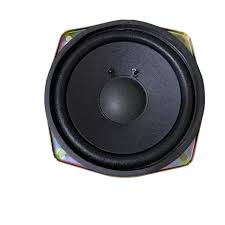
When it comes to audio equipment, Sony has consistently stood out as a brand that blends engineering excellence with user-friendly innovation. The model reference 1-504-875-11 is associated with a specific part number used in Sony speaker systems, and enthusiasts or technicians who come across this number often search for additional resources like the ZMA file. A ZMA file is a common file format used in loudspeaker measurement and simulation programs such as LEAP or LMS, containing impedance and response data that engineers and DIY audio hobbyists can use to model or optimize speaker performance.
Understanding what the Sony 1-504-875-11 speakers are, how the ZMA file works, and how these resources are useful requires a blend of technical knowledge, context, and practical application. This article explores the subject in depth—covering everything from Sony’s audio engineering legacy to the role of ZMA files in sound reproduction and DIY projects, practical methods of using these files, challenges users may face, and future trends in audio modeling.
Sony’s Legacy in Speaker Design
Sony has been a dominant force in audio technology for decades, producing products that span from consumer electronics to professional studio equipment. Their speaker designs often balance mass-market needs with advanced acoustic engineering. Over the years, Sony has produced iconic systems ranging from portable speakers to home theater systems and professional studio monitors.
The part number 1-504-875-11 follows Sony’s internal coding convention for replacement parts and service documentation. When users encounter this number, it usually appears in service manuals or repair catalogs. For audiophiles, identifying a part number is often the first step to sourcing components, understanding specifications, and seeking related technical files like ZMA files that can reveal the deeper acoustic fingerprint of the unit.
What is a ZMA File in Audio Engineering?
A ZMA file is a data file format used primarily to store speaker impedance information across a frequency spectrum. In loudspeaker design and analysis, impedance is not a fixed number but varies across different frequencies. For example, a speaker rated at “8 ohms” does not maintain exactly 8 ohms of impedance at every frequency. Instead, the impedance curve rises and falls, with peaks and valleys depending on factors like resonant frequency, crossover design, and enclosure acoustics.
Programs like LEAP (Loudspeaker Enclosure Analysis Program) or LMS (Loudspeaker Measurement System) use ZMA files in conjunction with FRD files (frequency response data) to create accurate simulations. Engineers rely on these files to design crossovers, predict amplifier load, and test system stability. For a specific Sony speaker, having the ZMA file allows designers or hobbyists to recreate the exact electrical behavior of the driver in their simulations.
Relevance of the 1-504-875-11 Speaker Model
The Sony 1-504-875-11 is not necessarily a consumer-facing product name but rather an internal part identifier. Such parts are often used in multiple systems, from home theater setups to component speakers in audio racks. Knowing the exact part number ensures compatibility when performing repairs, replacements, or upgrades.
For enthusiasts who want to simulate or modify systems using this specific part, the ZMA file provides invaluable information. Whether you’re designing a custom enclosure, adjusting crossover frequencies, or ensuring compatibility with amplifiers, the impedance data helps predict real-world behavior. Without it, one would need to physically measure the speaker using impedance analyzers—a process requiring specialized equipment.
How ZMA Files Are Used in Speaker Simulation
ZMA files are more than just numerical lists; they are the foundation for accurate acoustic modeling. Here’s how they are used in practice:
-
Crossover Design: When building passive crossovers, knowing the impedance at each frequency ensures that filters behave as intended. For example, a 2 kHz crossover point calculated without impedance data might shift significantly if the driver impedance rises at that frequency.
-
Amplifier Matching: Amplifiers must be paired with speakers that don’t cause unstable loads. The ZMA file helps predict whether an amplifier will struggle with impedance dips.
-
System Integration: In multi-driver systems, accurate impedance curves help engineers balance components, ensuring smooth summation of outputs and avoiding phase cancellations.
-
Enclosure Tuning: Resonances within a speaker enclosure show up in the impedance curve. A properly tuned box will display expected peaks at certain frequencies; mismatches can be diagnosed quickly with impedance data.
By providing this information digitally, ZMA files reduce trial and error, save costs, and allow for more sophisticated designs.
Advantages of Using ZMA Files
There are several clear benefits to having access to ZMA files for Sony speakers or any audio driver:
-
Precision Engineering: Designers can fine-tune crossover slopes and ensure the desired acoustic response.
-
DIY and Hobbyist Applications: Audio hobbyists building custom speakers gain professional-level insight without owning expensive test rigs.
-
Predictive Analysis: Problems like impedance dips or resonant peaks can be identified before physical prototypes are built.
-
Educational Value: Students and enthusiasts learning electroacoustics can experiment with real data.
-
Compatibility Checks: Ensures that modifications, replacements, or upgrades won’t compromise system performance.
The combination of Sony’s engineering quality with accurate ZMA data can empower users to maximize sound quality in both stock and modified configurations.
Challenges in Accessing or Using ZMA Files
While ZMA files are valuable, they are not always easy to obtain. Manufacturers like Sony do not routinely publish these files for consumer use; instead, they may exist in service documentation or private engineering databases. Users often rely on third-party measurements, community-shared databases, or create their own measurements using impedance measurement tools.
Challenges include:
-
Data Availability: Official ZMA files may be restricted or proprietary.
-
Measurement Accuracy: User-generated files vary in accuracy depending on equipment and technique.
-
Software Compatibility: ZMA files may require specific simulation software, limiting accessibility to casual hobbyists.
-
Interpretation Skills: Understanding impedance data requires a degree of technical literacy; without it, users may misapply the information.
Despite these hurdles, motivated individuals often find or generate ZMA files, ensuring the speaker community benefits from shared knowledge.
Applications in DIY Audio and Professional Settings
Both hobbyists and professionals find ZMA files indispensable:
-
DIY Audio Builders: Use ZMA files when creating custom loudspeakers from OEM drivers. Having Sony’s part-specific data ensures accurate crossover design.
-
Repair Technicians: In cases of speaker replacement, technicians can use ZMA data to confirm that substitute drivers match the electrical behavior of originals.
-
Professional Audio Engineers: When integrating Sony drivers into larger systems, impedance data ensures predictable interactions with amplifiers and processors.
-
Academic Research: Universities teaching electroacoustic courses often use ZMA and FRD files to help students understand driver characteristics.
For the Sony 1-504-875-11, ZMA files could be the missing link that allows both hobbyists and engineers to unlock the driver’s full potential.
Future Trends in ZMA File Use and Speaker Engineering
The future of speaker engineering is increasingly digital. Some key trends include:
-
Open Databases: More communities are creating open-source databases of ZMA files for popular drivers.
-
AI-Driven Design: Impedance data may feed into machine learning models that predict optimal enclosure or crossover designs.
-
Integration with CAD: Advanced modeling software may use ZMA files directly in 3D simulations, merging mechanical and electrical modeling.
-
Consumer Access: As DIY audio grows, manufacturers may release official ZMA and FRD files to empower enthusiasts.
-
Hybrid Measurement Standards: New file formats may emerge that combine impedance, response, and distortion data for more holistic simulations.
For Sony and other brands, embracing these trends could enhance user trust and engagement.
Conclusion
The combination of the Sony 1-504-875-11 speaker and its ZMA file exemplifies the intersection of professional engineering and consumer curiosity. Sony’s commitment to audio excellence ensures that parts like these hold value not just as components but as learning and experimentation opportunities. The ZMA file, meanwhile, transforms a simple driver into a well-documented tool that can be optimized, integrated, and studied with scientific precision.
Whether you are a DIY audio enthusiast seeking to design a custom speaker system, a repair technician ensuring compatibility, or an academic exploring electroacoustics, the role of ZMA files cannot be overstated. They provide the missing link between theory and practice, ensuring that systems perform as intended in the real world.
Frequently Asked Questions (FAQ)
Q1. What does the Sony part number 1-504-875-11 represent?
It is an internal Sony part code typically associated with a specific speaker driver used in some of their audio systems.
Q2. What is a ZMA file in loudspeaker analysis?
A ZMA file stores impedance data across frequency for a speaker, used in simulation software for accurate design and testing.
Q3. How can I get a ZMA file for the Sony 1-504-875-11 speaker?
Official files may not be public. You can check service manuals, community forums, or measure impedance yourself using specialized tools.
Q4. Why is impedance data important?
It helps ensure crossovers, amplifiers, and enclosures work correctly with the speaker, avoiding mismatches or performance issues.
Q5. Can hobbyists use ZMA files without advanced training?
Yes. While understanding curves requires some study, hobbyist-friendly software makes it easier to visualize and apply the data.
Q6. What other files are used with ZMA?
Typically, ZMA files are paired with FRD (frequency response data) files for comprehensive modeling.
Q7. Are ZMA files only useful for professionals?
No. DIY builders, students, and even casual audio enthusiasts can benefit from using them to improve sound quality and reliability.
